
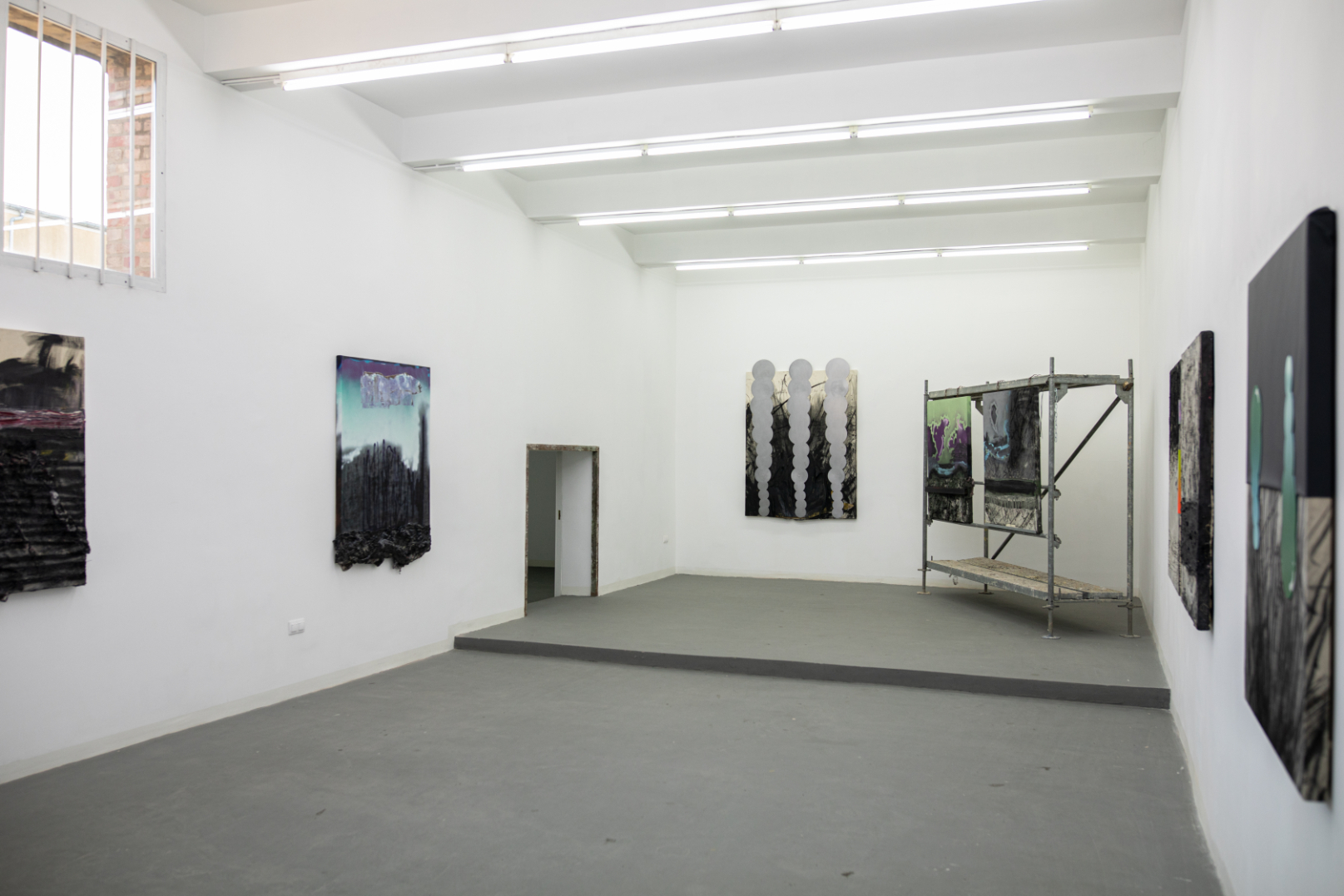
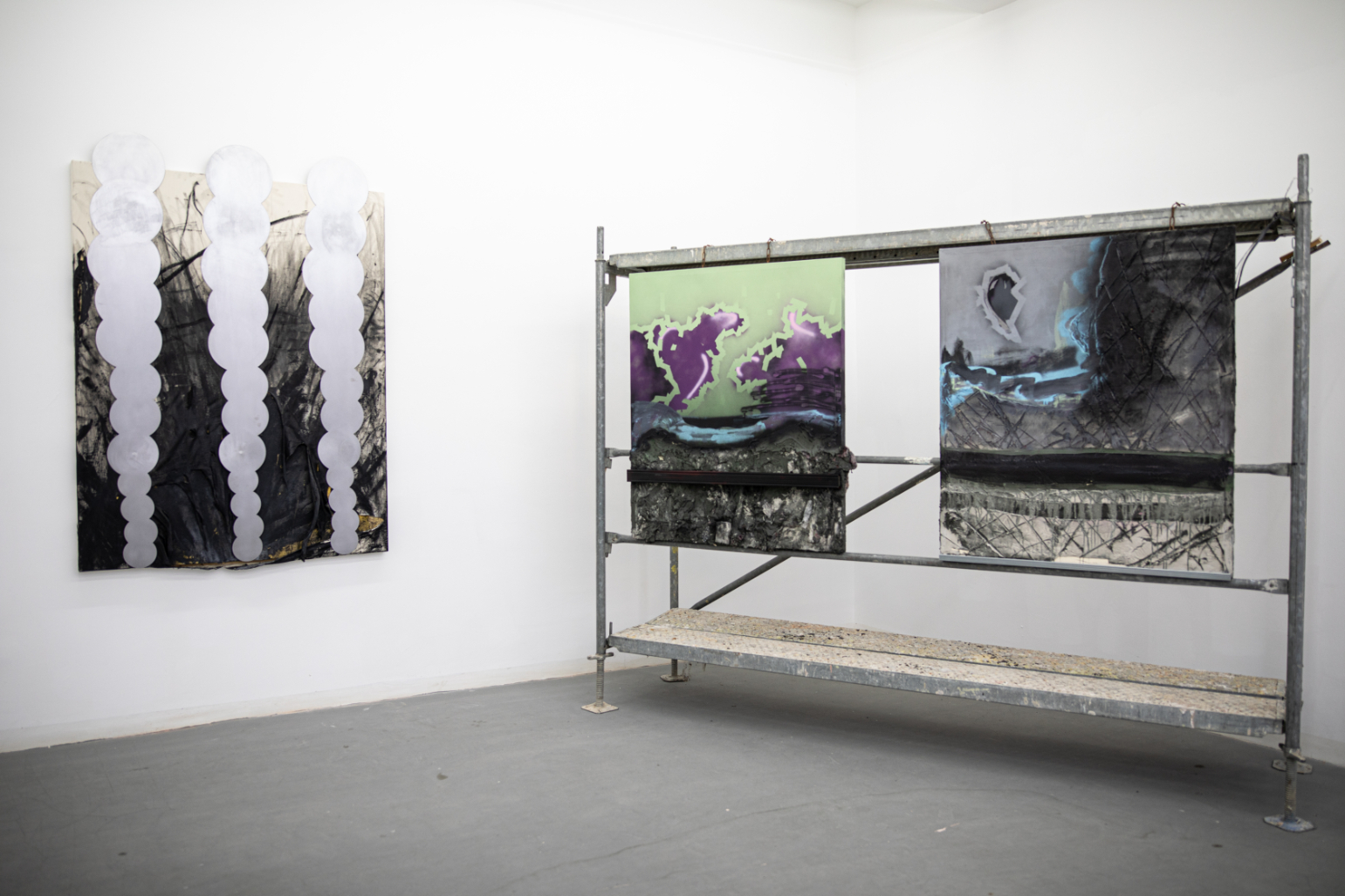
Venue: Artkartell projectspace, Budapest
Text by, Katica Kocsis
“I am a wall, a vulnerable and defenseless entity on which every event leaves a mark, my vulnerability and exposure are evident. Time piles more and more onto me, my emotions, the events that happen to me, the traumas I’ve experienced, but also the happy moments shape my surface, breaking my flatness, making me more complex. The layers that accumulate on me are sometimes rough, scratched, dark like coal, pastose like thick tar, or fragile like dried concrete. However, all of these belong to me, they are an important part of my identity, my inner self. The core of my being is the wall, which I don’t necessarily share with others, because revealing it exposes my vulnerability. Can I reveal everything that boils within me, shaping me, or is it worth observing the external reality while safely hidden?
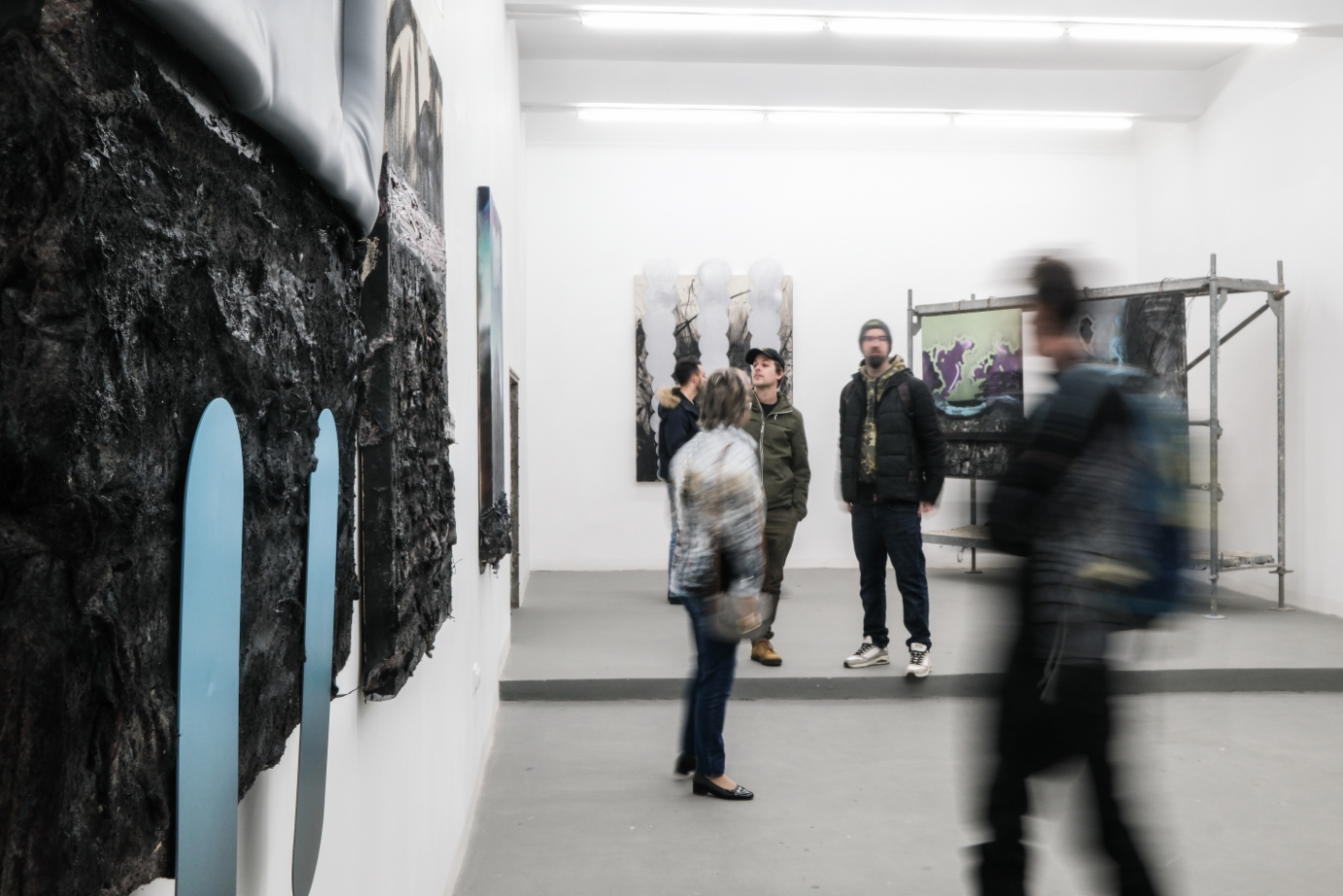
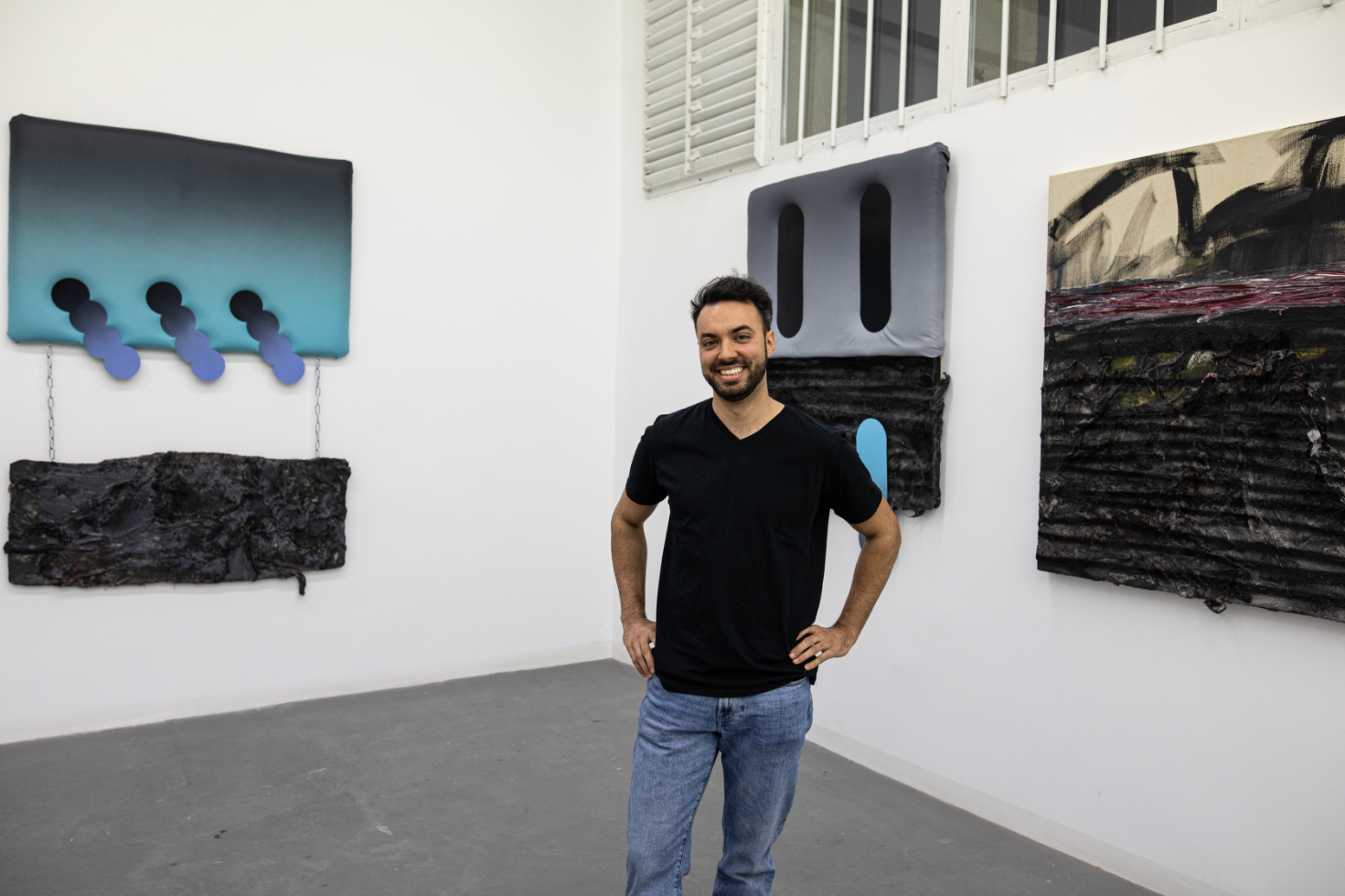
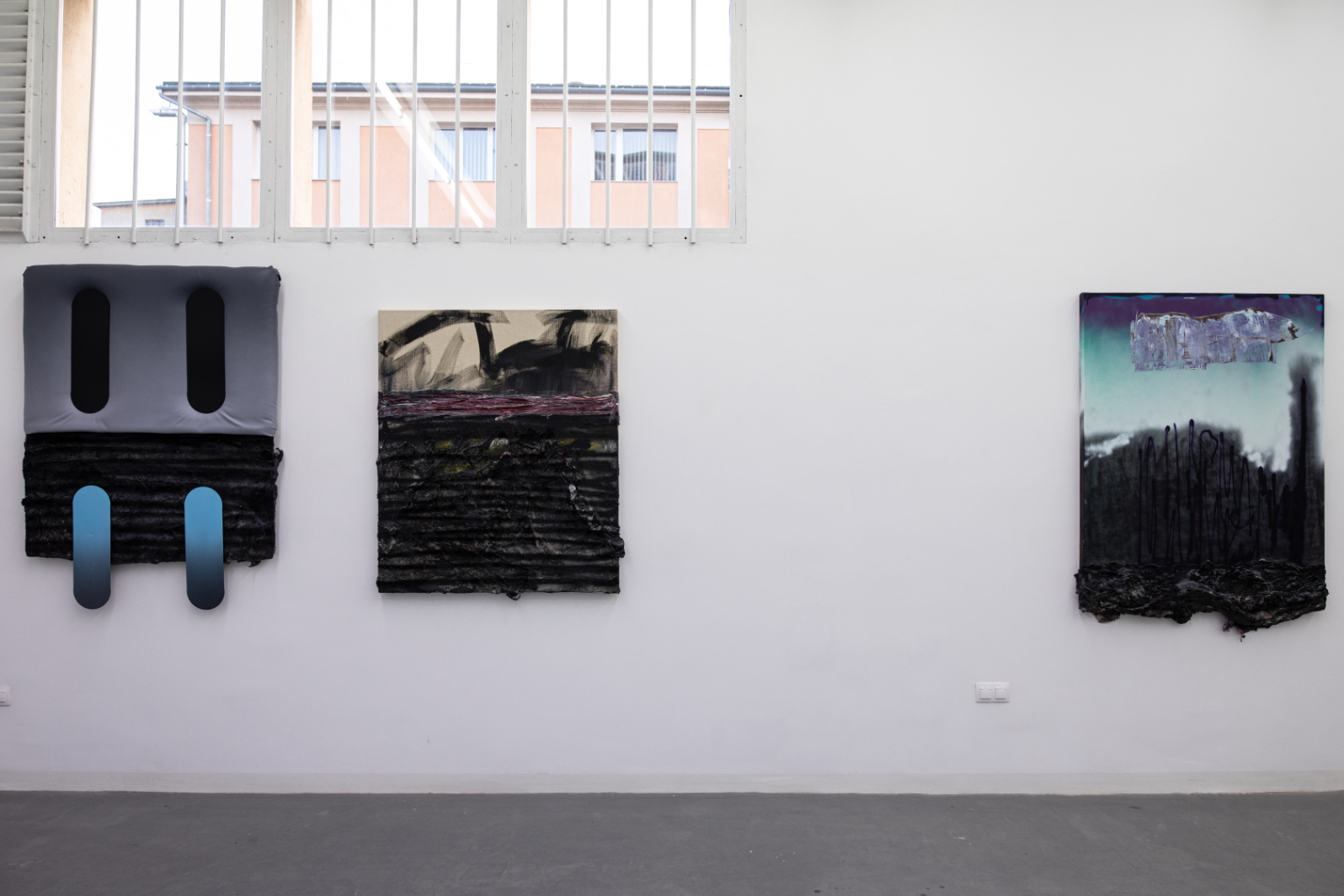
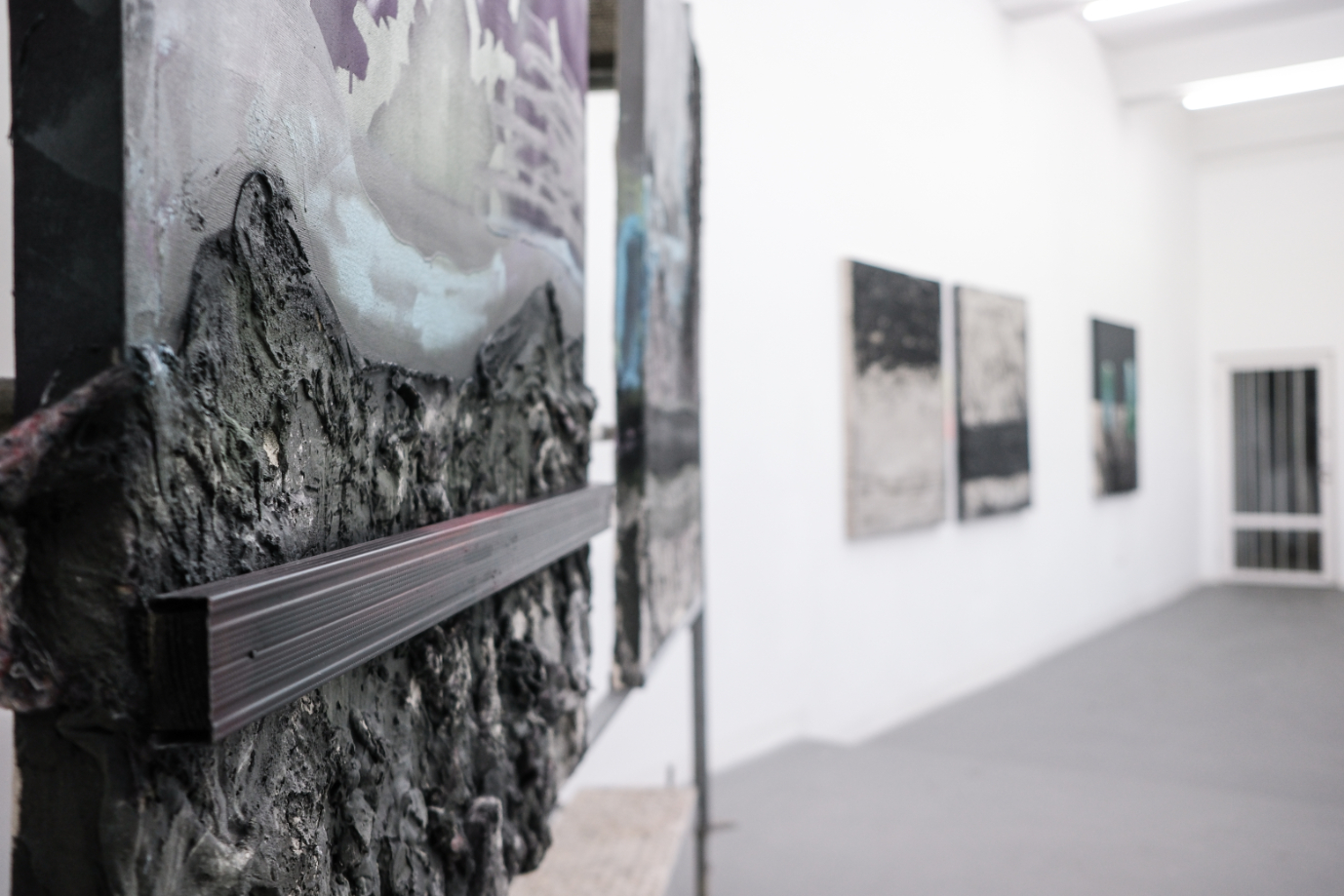
The paintings of Viktor Rónai revolve around this dilemma. The materials shown here present raw, untouched surfaces, compositions combining the visuality of construction and the sensuality of arte povera, signifying our ancient connection to materials, uncarved, unpolished, rugged, rough, and rough like our fragile inner selves, tortured by traumas. Their nudity is unsettling, yet it speaks of the courage to embrace vulnerability, to perceive and accept vulnerability and risk-taking. “I used to think that it wouldn’t be worth talking about my traumas, so I suppressed these feelings. Now, however, I see that revealing them will move me forward.”
The objects visible in the inner space thematize the abandonment of the mask: these are faceless, abstract portraits that can be read in the duality of concealment and revelation. The wrinkles and creases on the surfaces are traces of the foil used during preparation, which previously covered and masked these portraits, functioning quasi as masks. Symbolically, the foil represents everything that is superficial, false, covering, yet also protecting what lies beneath, what is real, true. And although these faces have been liberated from the foils that concealed them, the traces of those foils have been burned into the surfaces, indicating that while there is a chance for liberation, we will always carry the memory of our past concealments with us.
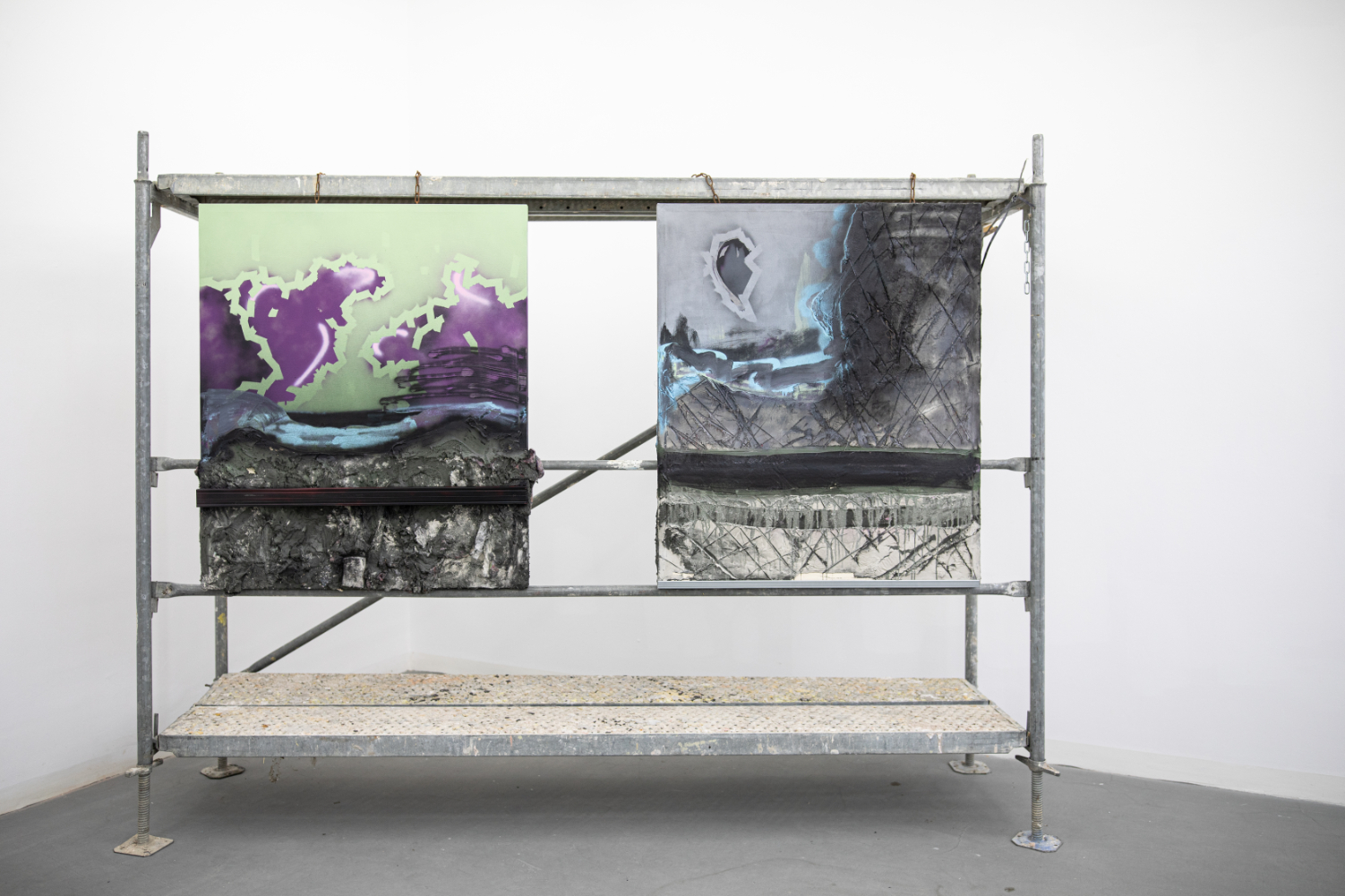
While the artist’s earlier works were about revelation, embracing true reality, his newer images are much more about concealment, covering, illusion: they claim that reality is deception, Maya’s veil, which, when we put it on like a soft blanket, hides the true nature of our materiality. This is a defense mechanism: we present ourselves outwardly as flawless, perfect, so that others cannot hurt us.
In his latest works, the artist juxtaposes the wildness and heat of the material with evenly treated, smooth, and quasi-flawless surfaces, which make us forget the true purpose of the material, placing the Apollonian in the foreground against the Dionysian. With this, Rónai not only brings to discourse the ambivalence of hiding and revealing the inner self but also reflects on the smoothing caused by virtuality.
https://artkartell.hu/vizit/652-a-folia-illuzioja-interju-ronai-viktorral